
Loose vs Fixed Bit Rings
The action of a bit is determined by more than just its mouthpiece. The design of the rings, whether loose or fixed, plays a significant role, as do features like tongue ports and center links. Because loose and fixed rings offer varying levels of stability and signal, the best choice depends entirely on your horse’s individual preference and comfort. Read more to deepen your understanding of different types of bits.
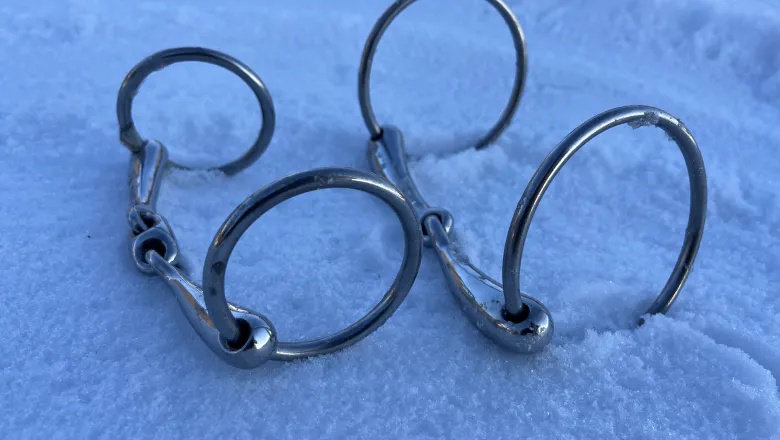
Loose bit rings
Loose rings move independently of the mouthpiece, allowing the horse to adjust the position of the bit and to distribute pressure in the mouth, provided the rein contact is light. While they offer a more mobile feel, loose rings are less stabilizing than fixed rings. They give slightly less precise signals, but the pressure release is more immediate. Loose rings can occasionally pinch or catch the corner of the horse's mouth, but using rubber bit guards prevents this, and also hinders the bit from pulling through the mouth.
May suit horses that:
- lean or get heavy on the bit
- prefer to move the bit around in their mouth
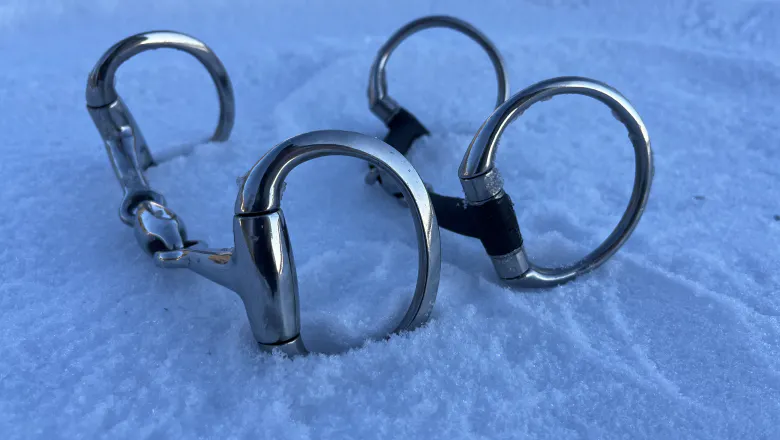
Fixed bit rings (also known as eggbutts)
Fixed rings are attached directly to the mouthpiece, providing a stable feel and more precise rein aids. Since the fixed rings can not pinch, they are also gentler to the corners of the mouth than loose rings. They further help frame the horse and encourage them to keep contact, making them ideal for horses that are unsettled or fussy in the mouth. With fixed rings, you can often use a shorter bit than you would with a loose ring equivalent.
May suit horses that:
- are sensitive or unsettled in the mouth
- struggle to take a contact
- are inconsistent in the contact
Which is the best?
It depends on the horse. The best choice is whatever your horse seems most comfortable with. Some horses prefer loose rings, others appreciate fixed rings. Pay attention to your horse under saddle: a calm and quiet mouth is what to strive for.
Still unsure? The HayHay guide to bit fitting can help you work it out.


