
Snaffle Bits: The Function of Each Type
Why choosing the right bit matters
Choosing the right snaffle is about matching the mouthpiece and ring style to your horse's mouth anatomy, schooling and way of taking contact. A horse that is comfortable with the bit can relax, maintain a steadier contact and work more correctly. This guide explains the main snaffle designs and how each one affects the horse.
The HayHay guide to snaffle bits is brand-independent and covers single-jointed snaffles, double-jointed snaffles, mullen mouth bits, barrel bits, Novabits (soft rubber), full-cheek snaffles, Baucher bits, lock-up bits, Waterford bits, Peewee bits, Golden Wings bits, tongue-correction bits, and foam bits.
Also see the HayHay guide to bit fitting.
The main bit categories
All bits can be divided into four main categories based on how they work: snaffles, leverage bits, gag bits, and combination bits. This guide focuses on snaffles. Whatever the bit, the rider's hand also shapes how it acts on the horse, so remember to always ride with a soft hand and a light contact.
Snaffle bits
Snaffles are the foundational family of bits. They have no shanks; therefore, they do not create leverage or gag action. Snaffles come in many designs, and each distributes pressure differently. The most common snaffles are double-jointed (three-piece) bits, single-jointed (two-piece) bits, and mullen mouth (straight, unjointed) bits. There are also versions with more joints or with ports. While snaffles are generally mild, some harsher versions exist, such as the Waterford, which is designed to make it harder for the horse to take hold of or lean on the bit.
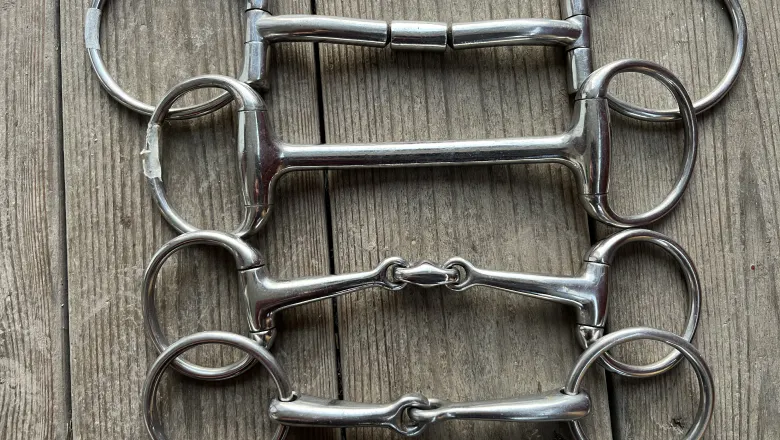
Common snaffle bits: how they act and who they suit
Single-jointed snaffles (two-piece bits)
Single-jointed snaffles have only one joint, making them slightly harsher than double-jointed snaffles. When the rein pressure is applied, the bit forms a V-shape in the mouth and can press up into the palate. This is called the nutcracker effect, and it gets worse if the bit is too long. It is therefore crucial that single-jointed bits are correctly fitted. To reduce the nutcracker effect, you can choose a single-jointed bit with a lock-up feature, which makes it a milder alternative. Whether a horse prefers a single-jointed or double-jointed bit comes down to individual anatomy.
May suit horses that:
- have a high or arched palate
- have more flesh around the bars, which risks being pinched by the joints on a double-jointed snaffle
- want steady, even contact on both sides
May be less suitable for horses that:
- have a low palate
- have a tendency to pull against the reins or toss their head
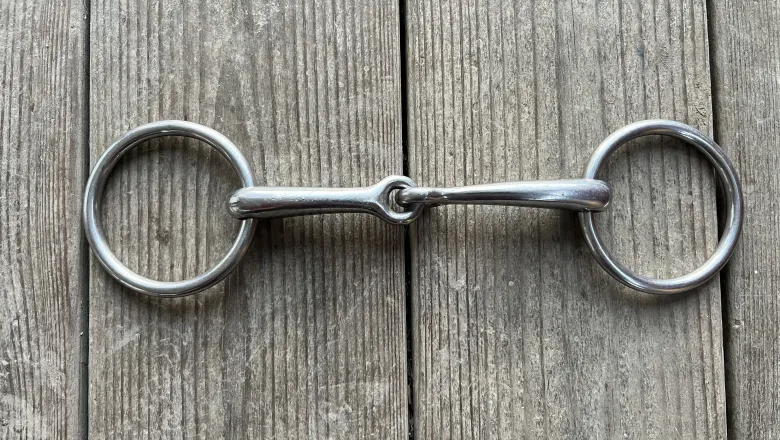
Double-jointed snaffles (three-piece bits)
Double-jointed snaffles are generally mild and well-accepted by many horses. They are relatively mobile, allowing the horse to redistribute pressure as long as the rider's contact is soft. Where a double-jointed bit applies pressure depends mainly on the length and shape of the center link.
Double-jointed snaffles must be sized correctly, otherwise, they risk pinching the corners of the mouth, rubbing at the bars, or cutting the inside of the cheeks. When fitting a double-jointed bit, pay close attention to how wide the horse is across the bars. If the centre link is too long, the joints will sit directly over the bars, which is very uncomfortable. Choosing a slightly shorter centre link on double-jointed bits is usually wise.
May suit horses that:
- dislike a stiff feeling in the mouth
- are a bit forward or lively
- find it easier to accept contact on a jointed bit
May be less suitable for horses that:
- mouth or play with the bit (the moving parts can trigger constant chewing)
- struggle to take contact and prefer more stability
- have bit-related wear on the teeth
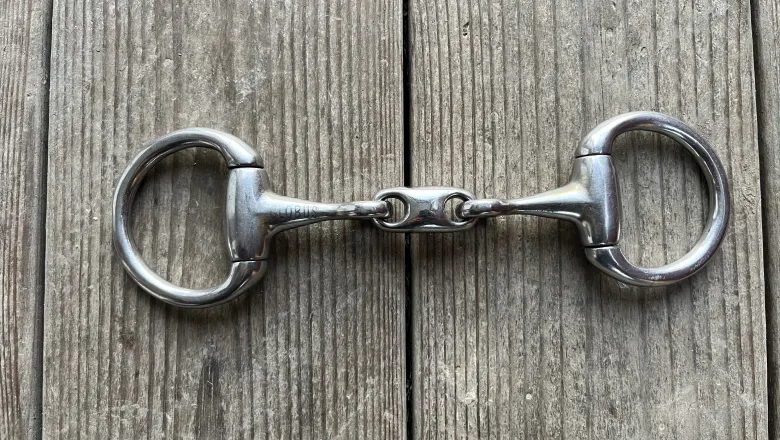
Mullen mouth snaffles (unjointed)
Mullen mouth snaffles are generally mild. Because there is no joint, they distribute pressure evenly across the tongue. The straight mouthpiece also reduces the risk of pinching or injuring the soft tissues inside the mouth. They lay still and stable in the mouth, making it harder for the horse to play with or chew on the bit. Mullen mouth bits are usually appreciated by many different types of horses. With a mullen mouth, the rein pressure is applied across a larger area of the mouth than with a jointed snaffle. However, mullen mouths can increase pressure on the bars.
May suit horses that:
- are sensitive and struggle to take contact
- prefer steady, even pressure
- are young or green
- chew on jointed bits
May be less suitable for horses that:
- are hard in the mouth
- are heavy in the hand and/or hard to steer
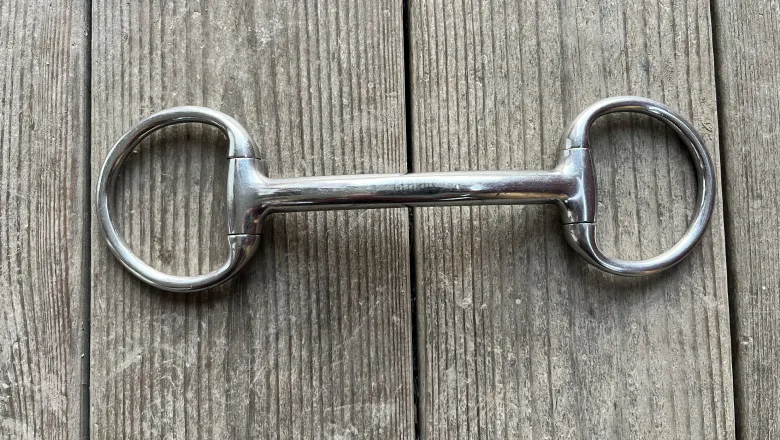
Barrel bit (Billy Allen snaffle)
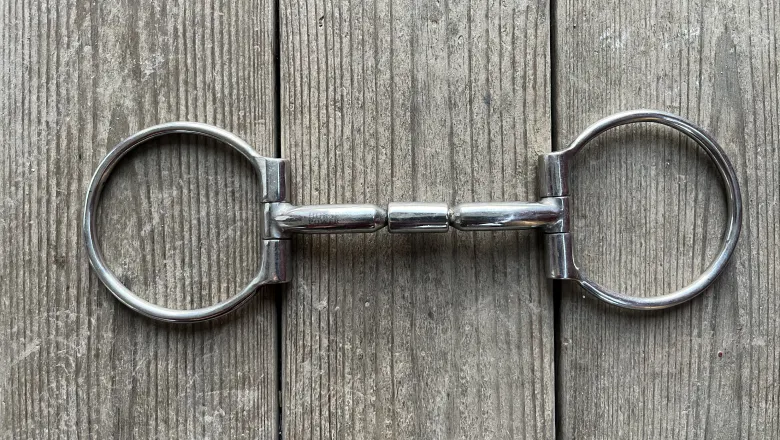
Barrel bits are mild and act much like mullen mouth bits, but allow for slightly more independent movement. The mouthpiece looks like a mullen mouth but features a loose barrel in the middle. This barrel allows each side of the bit to move independently with the corresponding bit ring. Compared with a regular mullen mouth, the bit is less fixed while still sitting more quietly than a fully jointed bit. It distributes pressure evenly across the tongue, offers great stability, and is well-liked by most horses.
Some designs of the barrel bit have very thin connection points to the central barrel, making them wear out more quickly, and in very unlucky cases, break. Check the bit for wear after every ride, or choose a design with a mouthpiece of even thickness throughout.
May suit horses that:
- are sensitive and struggle to take contact
- are inconsistent in the contact
- are young or green
- chew on jointed bits
- are sensitive, and on the lively or hot side
May be less suitable for horses that:
- become heavy in the hand or dull on the bit
Novabits (soft rubber)
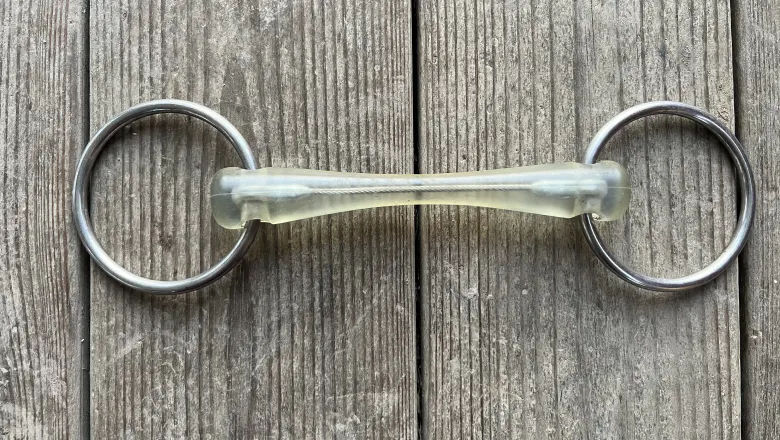
A novabit has loose or fixed rings and a flexible rubber mouthpiece. Functionally, a novabit is very mild. It is mullen-shaped and distributes pressure evenly across the mouth, but a defining feature is its flexibility under rein pressure. With a firmer rein pressure, the bit flexes slightly inside the mouth and absorbs some of the pressure that would otherwise pull at the corners of the mouth.
One drawback is that novabits are thick at the edges and therefore take up a lot of room in the mouth. Because they are made of rubber, friction increases, which can chafe the corners of the mouth. It is wise to alternate between different bits and check the horse's mouth regularly. The rubber is delicate and marks easily if chewed. If a novabit has gotten bite marks, replace it: there is a risk of rubs or outright breakage. Some novabits have a steel wire inside as a safety feature against snapping.
May suit horses that:
- are sensitive and struggle to accept the bit or take contact
- are young or inexperienced
- dislike the feeling of metal bits or have had negative past experiences with bits
May be less suitable for horses that:
- are heavy in the hand and struggle to take contact
- chew on the bit
- find the flexing sensation uncomfortable
- are small or have a narrow mouth (choose a thinner model, since novabits are thick at the edges)
Fullcheek snaffles
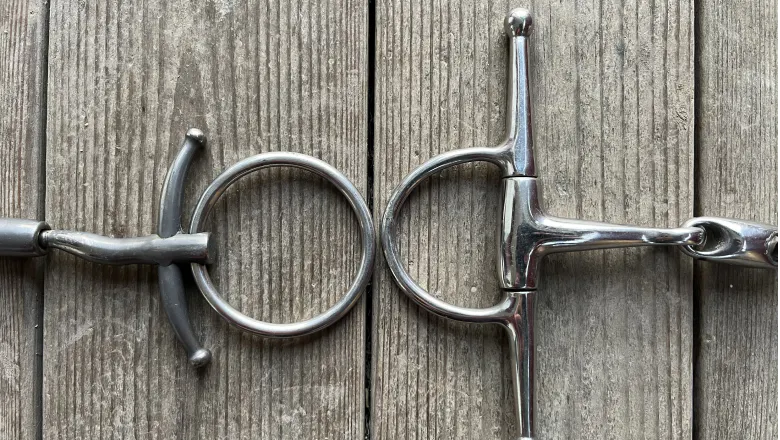
Fullcheek snaffles keep the bit stable in the mouth and help frame the horse. On a leading rein aid, the long sidepiece gently pushes the horse's face to the side, distributing some of the pressure to the outside of the mouth. This also makes the horse easier to turn with clear, soft signals, and prevents the bit ring from being pulled through the mouth. Fullcheeks work well for most horses. Small leather bit keepers (fulmer loops) can be used to fasten the fullcheek to the bridle's cheekpiece, keeping the bit in its optimal position.
Fullcheeks come in various designs and lengths, with loose or fixed rings. How mild or harsh the effect of the bit is depends on the chosen mouthpiece. One drawback is that the fullcheeks increase pressure on the inside of the cheeks, between the bit and the premolars. It is a good idea to alternate this bit with other styles.
May suit horses that:
- are uneven or inconsistent in the contact
- are young: the cheeks offer clear, kind signals as the horse learns
- are sensitive and overreact to rein aids
- prefer highly stable alternatives
- have sensitive corners of the mouth, or horses where the bit ring tend to pull through the mouth
Baucher bits
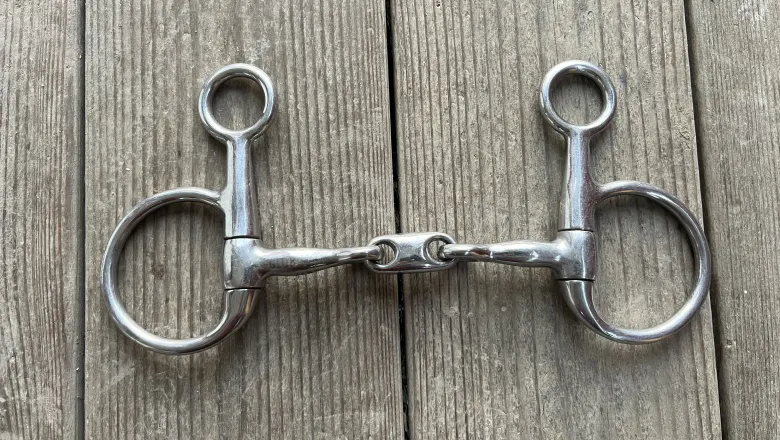
Baucher bits are unique because they feature a short upper cheek above the bit ring, but no lower shank. The small upper ring attaches to the cheekpiece of the bridle, while the larger ring takes the rein. As a result, Baucher bits sit very still and steady in the mouth. When rein pressure is applied, the mouthpiece lifts up in the mouth, relieving pressure on the tongue and bars. At the same time, the upper cheek rotates forward. With rein pressure up to about three kilos, this rotation relieves pressure from the poll (visible as the bridles' cheekpieces become loose). At or above three kilos, the bit has reached its maximum rotation, and then begins to press on the poll. So under firmer contact, a Baucher does apply a bit of poll pressure.
Baucher bits are classified as mild, and contrary to a popular misconception, they do not create leverage. If you feel you have tried many bits without success, a Baucher is worth trying. It is a great alternative for hot horses, since they tend to respond well to how the Baucher moves, without needing a harsh bit.
A note: Baucher bits are sometimes described as having a "gag effect". It's important to distinguish the Baucher's slight upward lift from the genuine gag effect of a Dutch gag bit or a running gag. Because the Baucher's mouthpiece is fixed and cannot slide freely up the cheekpieces, it is not harsh. A better description is that a Baucher lifts in the mouth.
May suit horses that:
- are sensitive to tongue or bar pressure
- are hot and lively (both because of the different feel, and the poll pressure under firmer contact)
- refuse other bits, or have bit-related tooth wear
- need plenty of stability and framing
May be less suitable for horses that:
- dislike how a Baucher moves in the mouth. This is highly individual and best discovered through trial
Lock-up bits
Lock-up bits are single-jointed or double-jointed bits with a special lock at the joints, which means the bit cannot fold up in the mouth and pinch or rise into the palate. There are many designs and models, but they share one thing: on a rein aid, the lock-up bit locks and acts like a straight bit. This prevents the nutcracker effect. On a lighter rein contact, the bit lies in its base form instead, that is, as a single-jointed or double-jointed option. The bits are generally mild.
May suit horses that:
- are sensitive and on/off in the contact, and struggle to take a contact
- become rigid on straight bits but are not happy on ordinary jointed ones
- need a substitute for a harsher bit on hot horses, as it gives a different feel in the mouth
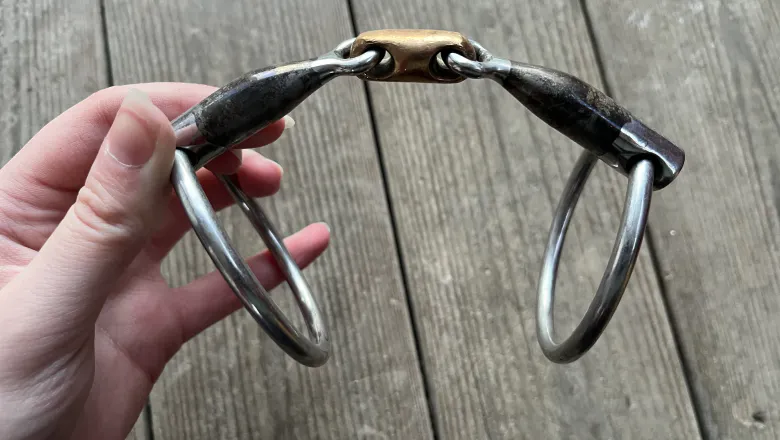
The image shows a double-jointed lock-up bit in the locked position.
Waterford bit (also called bubble bit or ball bit)
The Waterford bit is a five-piece bit made up of four short links on the mouthpiece, which makes it very flexible and mobile. It is a harsh bit. Because it is so mobile, horses can partly redistribute the pressure. The many parts do, however, raise the risk of pinch injuries to the mouth tissue, since the joints can nip. It gives a lot of movement inside the mouth, which some horses find unpleasant, so they avoid taking a contact or leaning on the bit.
The bars are especially exposed when a Waterford is used, as the edge of the links can catch or rub. The bit must be used by an experienced rider with a still hand. If it is drawn back and forth, it rubs against the bars.
The Waterford is usually used on horses that become heavy in the hand or lean on the bit, because they cannot bite down on it. Yet horses that are heavy in the hand and lean on the bit often lack strength or are in discomfort. A bit that blocks the behaviour can mask or worsen the problem for the horse rather than solve it. Horses should want to take a contact with the bit through correct training, something this type of bit makes harder. If you are using a Waterford, it is a good idea to switch to another option.
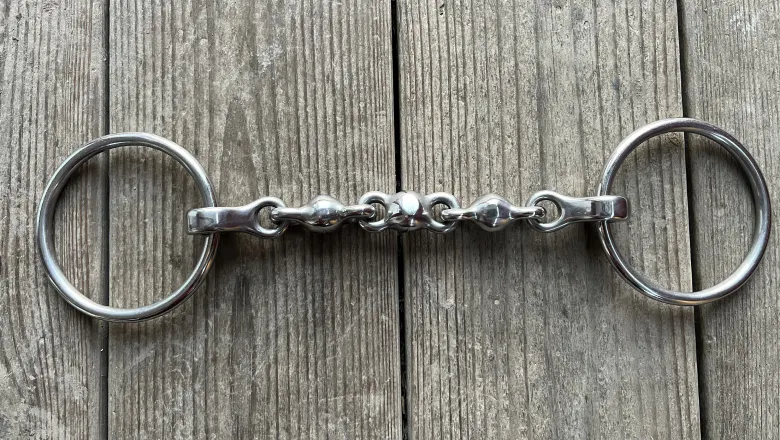
The image shows a Waterford bit.
Peewee bit
The Peewee bit has a straight, curved mouthpiece that is only 8 mm thick. The bit has side bars running parallel to the mouthpiece, back towards the chin. A strap that passes under the chin attaches to two smaller rings there. The idea is to hold the bit stable in the mouth and stop the horse leaning on it. The design keeps the corners of the mouth from being pinched in the loose rings. The Peewee bit is made of sweet iron to increase the horse's draw to the bit.
The very narrow mouthpiece makes the bit harsher and amplifies the point pressure on the bars. The Peewee bit can suit horses with a thicker tongue, thanks to the curved mouthpiece, as it takes up less room in the mouth. A horse with a low palate does, however, risk the curved shape rising into the palate, so it is not a suitable option there. How horses react to the Peewee bit is very individual. Some get on well, while others find the narrow bar far too harsh. Stay soft in the hand when using a Peewee, since the point pressure is centred on the bars.
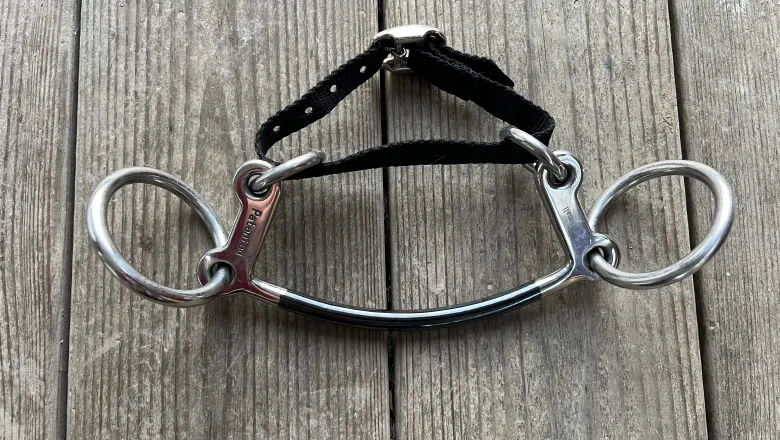
The image shows a Peewee bit.
Golden Wings bit
Golden Wings bits are gold-coloured bits in a material that tastes sweet, and what sets them apart are the wings at the bit rings. The wings can be described as a metal plate bent along each bit ring. The idea behind them is to give the bit more stability and protect the corners of the mouth from nipping. The bits have loose rings, which would normally pinch the corners of the mouth, but the wings lie against the bit rings with the corners on the inside, so they are not pinched.
The drawback of Golden Wings bits is that the wings on the sides can press into the horse's cheeks. The wings can move inward, raising the pressure on the cheek linings and so increasing the risk of pressure injury or soreness. Golden Wings bits come in several forms, including single-jointed and double-jointed, with ordinary bit rings or Dutch gag rings, among others. How harsh the bit is depends on which mouthpiece and which bit ring it has.
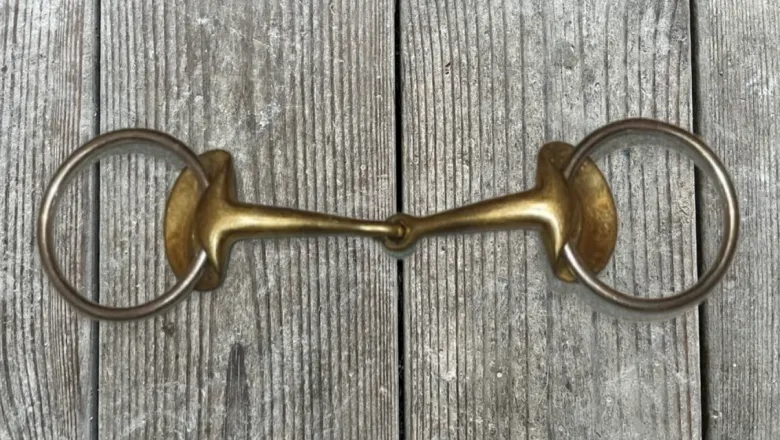
The image shows a double-jointed Golden Wings bit.
## Specialist snaffle bit designs
### Tongue-correction bit
Like a snaffle, but with a central plate, known as a spoon. The spoon is a flat piece of metal that lies on top of the tongue and is meant to stop the horse putting its tongue over the bit. The spoon can point one way in the mouth, or both forward and back. It is very important to remember that a horse often puts its tongue over the bit to escape a discomfort. Stopping it leads to greater stress, pain and discomfort for the horse. A tongue-correction bit masks a problem but does not solve it. If you are using one, it is a good idea to look at other options and think about why the horse reacts as it does.
Tongue stick (tongue-correction stick)
The tongue stick has a similar function and design to the tongue-correction bit, but it is a separate bit that sits behind the actual one. So when a tongue stick is used, the horse has two bits in its mouth.

The image shows two different tongue-correction bits (top), and a tongue stick at the bottom.
Foam bit (also called soft touch bit or foam-rubber bit)
The foam bit is a thick but soft foam-rubber bit. The idea is for the bit to mould to the horse's mouth as you put it in. The foam rubber cannot be compressed indefinitely, though, so the bit ends up far too thick. This makes it very hard for horses to close their mouth properly, which can let air into the oral cavity during work. That affects the position of the soft palate, which can restrict the horse's breathing and, over time, lead to problems. The foam rubber also increases friction in the mouth, raising the risk of burns.
The foam bit was first used in harness racing, but other models have since been developed so the bit is used across more and more disciplines. It was designed for sensitive horses, strong horses and horses with mouth problems, but it is not quite as gentle as it sounds.
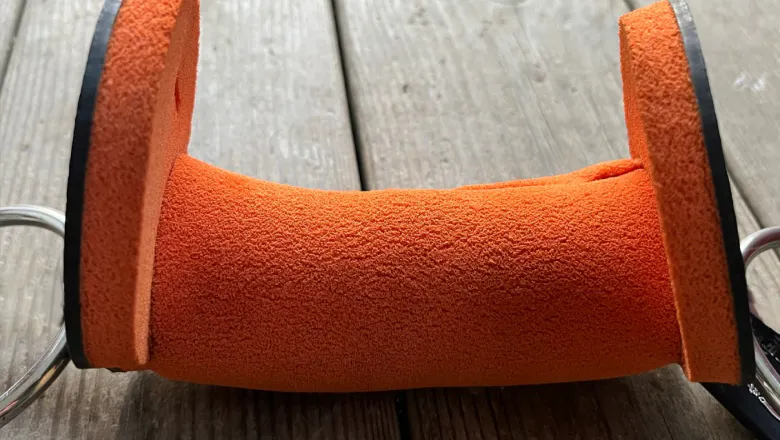
The image shows a foam bit.


